
Klimabonus 2026 · EV Charging
EV Charging Station Subsidies in Luxembourg
€500 HEMS bonus granted when ≥2 devices are connected (charger, PV, battery, HP…). The charging station is subsidised at 50% of the cost excl. VAT, up to €1,400 for an ISO 15118-20 station. Details and procedures below.
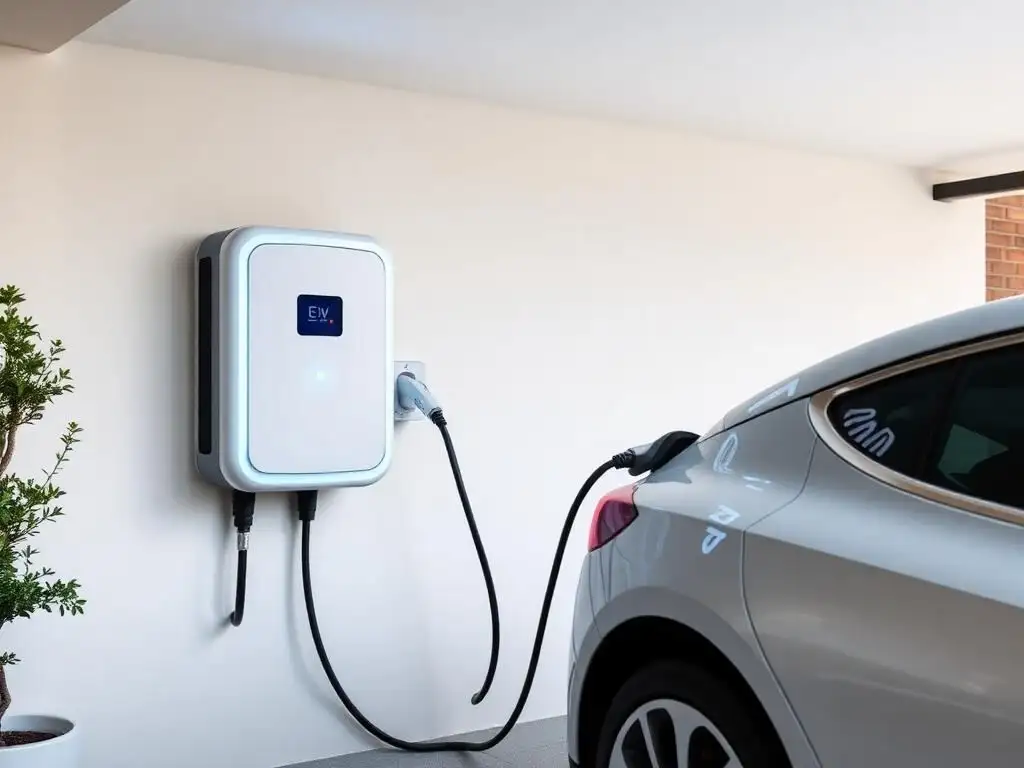
Charging Station Subsidies Overview
Klimabonus 2026 supports e-mobility by subsidising home wallbox installations: 50% of the cost excluding VAT, up to a cap that depends on the type of station.
- Standard station: up to €750
- Smart station: up to €1,200, ISO 15118-20 station (invoiced in 2026): up to €1,400
- 3% VAT for a home at least 10 years old (not automatic)
- Combinable with other Klimabonus premiums
- Private parking and condominiums
- Compatible with EV purchase premium (Clever fueren)
Klimabonus 2026, Charging Station
| Type | Premium | Conditions | Notes |
|---|---|---|---|
| Standard station | 50% excl. VAT, max. €750 | > 3.7 kW, approved electrician | Standard wallbox |
| Smart station | 50% excl. VAT, max. €1,200 | > 3.7 kW, approved electrician | Controlled charging |
| ISO 15118-20 station (invoiced in 2026) | 50% excl. VAT, max. €1,400 | > 3.7 kW, ISO 15118-20 standard | Standard that enables bidirectional charging (V2G/V2H), among other things |
| Home energy management system (HEMS) | €500 | At least 2 connected devices | Charger, PV, battery, HP… |
| Condominium | See guichet.lu | Per charging point | Each owner can apply |
| Public/Commercial | Not covered here | Separate programme | See guichet.lu |
Eligibility
Electric vehicle
Applicant must own or have ordered a BEV or PHEV registered in Luxembourg.
Compliant installation
Wallbox on private parking by certified electrician with AESL certificate.
Minimum power
At least 3.7 kW (single-phase) or 11 kW (three-phase recommended).
Smart metering
Separate meter or sub-metering for vehicle consumption required.
Luxembourg property
Owners and tenants (with consent) eligible.
Application deadline
The application is made after installation, within the year following 31 December of the invoice year.
Process
- 1
Choose wallbox
11 kW three-phase recommended for optimal charging.
- 2
Get quotes
Including wallbox, electrical work, and civil works if needed.
- 3
Check electrics
Verify panel capacity and subscribed power.
- 4
Install & certify
Have the station installed by an approved electrician and get the AESL certificate.
- 5
Submit application
On MyGuichet.lu with the invoice, AESL certificate and technical specs, within the year following 31 December of the invoice year.
- 6
Receive premium
Once the file is approved: 50% of the cost excl. VAT, up to the cap for your station.
Additional Benefits
Clever fueren
Combinable with national EV purchase premium (up to €8,000).
Solar charging
With PV panels, drive on sunshine.
Smart control
Optimise charging by tariff, PV production, and grid load.
Property value
Parking with wallbox increases property value.
Frequently asked questions
FAQ
Single or three-phase?
Wallbox in a condo?
Do I need to upgrade my power?
What is V2G/V2H?
What is the application deadline?
Is a home charging station eligible for the Klimabonus Wunnen?
Do I need the co-owners' agreement to install a charger?
Who can carry out the work?
Must the subsidy be requested before work starts?
Is load management mandatory?
Do communal subsidies add to the national one?
⚠️ Disclaimer: Information for guidance only. Consult official sources for current data. Amounts checked on 27 September 2026.
Subsidies for a home EV charging station in Luxembourg
What the public support covers
Installing a home electric vehicle charging station falls under the Klimabonus Wunnen, the national housing subsidy scheme. Support covers the charging station itself and the electrical work needed to connect it: a dedicated circuit, the required residual-current protection, and where several charging points share one connection, a load-management system.
A charging station can be combined with a solar installation or a home battery, but each piece of equipment falls under its own line of the scale. The amounts and caps applicable at the time of your application are published on guichet.lu; no figure should be assumed correct without checking the official sheet.
Single-family house versus a shared car park
The situation differs considerably depending on whether the charging point serves a single-family house or a parking space in a co-owned building. In a house, the owner decides alone, subject to the capacity of the electrical connection. In a co-owned building, installing a charger on a private space often requires a decision from the owners' association, particularly when cabling runs through common areas.
The co-ownership rules and the power available at the building's main meter shape the project as much as the budget does. Load management becomes necessary as soon as several residents install chargers on the same shared meter, to avoid exceeding the subscribed power.
The role of the authorised electrician and the grid operator
Connection work for a charging station must be carried out by a company holding a business permit for the electrician trade. It sizes the cabling, installs the required protections, and issues the compliance certificate that is essential to the subsidy file.
Depending on the charger's power and the capacity of the existing connection, a step with the grid operator may be needed to confirm or increase the available power. The electrician identifies this need during the technical visit and prepares the relevant request if applicable.
Documents and the application process
The file usually includes the company's detailed quote, the electrical compliance certificate, the paid invoice and, for co-owned flats, the owners' association decision where one is required. Check whether a prior application must be submitted before work starts: in several strands of the Klimabonus Wunnen, approval in principle precedes the order, and placing the order too early can jeopardise eligibility.
The sequence to follow mirrors other subsidy strands: free energy advice from Klima-Agence, a quote from an authorised company, prior approval where the scheme requires it, the works, the invoice, and then assembling the application file with supporting documents.
Common reasons a file is rejected
The most frequent rejections stem from work started before the required prior approval, an invoice issued by a company without the matching authorisation, or an incomplete co-ownership file lacking proof of the association's decision when needed. A missing compliance certificate, or an invoice that does not separately itemise the charger and the ancillary work, also delays processing.
Communal subsidies, separate from the national scheme, exist in some municipalities and vary from one commune to another. Check with your commune's technical department: they add to the Klimabonus Wunnen rather than replacing it.
Where to get binding figures and free advice
The applicable amounts, caps and eligibility conditions are published on guichet.lu and should be checked before any financial commitment. Klima-Agence offers free, independent energy advice that clarifies how a charging station, a possible solar installation and the available connection power fit together before you request quotes.
Klimabonus 2026 · EV Charging
€1,400