
Klimabonus 2026 · Battery
Home Battery Subsidies in Luxembourg
Up to €2,250 for home energy storage installation. Discover amounts, conditions, and procedures.
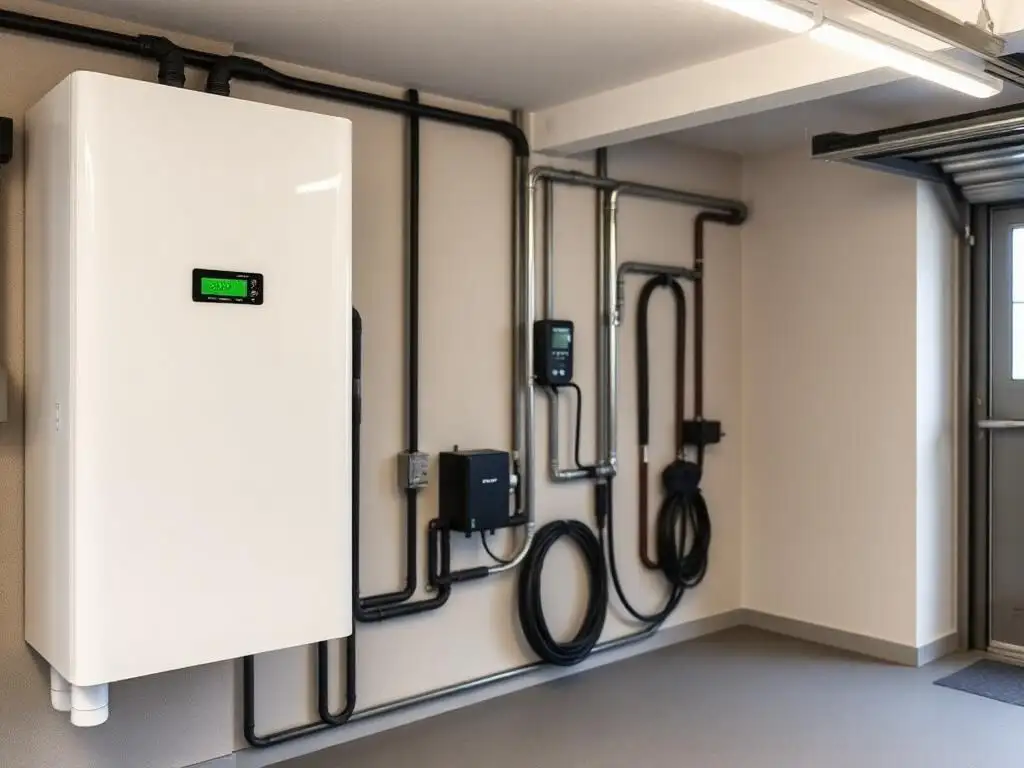
Battery Subsidies Overview
Klimabonus 2026 offers a premium for installing residential storage systems paired with a PV installation.
- Official formula: Q × (500 − 500/18 × Q) €
- Maximum €2,250, reached from 9 kWh
- Must be paired with PV installation
- Combinable with PV premium and 3% VAT
- 1.5% Klimaprêt interest subsidy available
- Increase self-consumption from 30% to 70%
Klimabonus 2026, Home Battery
| Capacity | Indicative Subsidy | Notes |
|---|---|---|
| 2 kWh (minimum) | €889 | Minimum eligible capacity |
| 5 kWh | €1,806 | Standard residential size |
| 9 kWh and above | €2,250 | Premium capped from 9 kWh |
| Without PV | Not eligible | Battery must be paired with PV |
Eligibility
PV installation required
Battery must be installed with existing or simultaneous PV.
Certified battery
Storage certified per EN/IEC 62619. LFP and NMC eligible.
Certified installer
Installation by authorised professional.
Existing building
Building completed for at least 2 years.
Minimum capacity
At least 2 kWh usable capacity.
Manufacturer warranty
Minimum 10 years or 4,000 cycles required.
Application Process
- 1
Assess needs
Analyse consumption and PV production for optimal battery size.
- 2
Get quotes
Compare at least 3 offers including battery, hybrid inverter, and installation.
- 3
Order the installation
As for photovoltaics, no prior application is needed: the order and invoice dates determine the amount.
- 4
Installation
Have system installed by chosen professional.
- 5
Receive premium
Apply on MyGuichet.lu within 4 years from 31 December of the invoice year. Payment once the file is approved.
Additional Benefits
Maximised self-consumption
Increase from 30% to 70% by storing solar surplus.
Energy independence
Less grid dependency, protection from electricity price increases.
Backup power
Some batteries provide emergency power during grid outages.
Smart management
Automatic charge/discharge optimisation.
Frequently asked questions
FAQ
What battery size?
LFP or NMC?
Payback period?
Space needed?
Is a battery without solar panels eligible?
Must the application be submitted before works start?
Which company can carry out the installation?
Can the battery and photovoltaic subsidies be combined?
What documents should be prepared?
Where can the exact subsidy amount be found?
⚠️ Disclaimer: Information for guidance only. Please consult Klima-Agence and MyGuichet.lu for current official data. Amounts checked on 27 September 2026.
Subsidy for a home battery: what you need to know
What the support covers under the Klimabonus Wunnen
The Klimabonus Wunnen, which replaced the former PRIMe House programme in 2022, includes a dedicated strand for home storage batteries coupled to a photovoltaic installation. The support targets the storage equipment itself and the integration works needed to connect it, not the photovoltaic installation as such, which falls under a separate strand of the same scheme.
This battery strand is designed to support self-consumption: a battery stores electricity produced during the day so it can be used in the evening, reducing the share of electricity bought from the grid. The support recognises this role without replacing the profitability calculation that each household must make based on its own consumption profile.
The eligibility logic
Three conditions generally structure eligibility. First, the battery must be coupled to a photovoltaic installation, whether existing or installed at the same time; a stand-alone battery without associated solar generation does not fall under this strand. Second, the works must be carried out by a company authorised to perform the relevant activity in Luxembourg, which rules out self-installation or an unauthorised installer. Third, the installation must be located in a dwelling within the meaning of the scheme, which in principle excludes purely professional uses or non-residential buildings.
These three conditions should be checked before signing the quote, since an installation that does not meet them cannot qualify for support even if it is technically sound.
Documents typically required
An application file typically gathers proof of ownership or occupancy of the dwelling, the company's detailed quote describing the battery's capacity and its integration with the photovoltaic installation, proof of the company's establishment authorisation, and, once the works are complete, the settled invoice and possibly a commissioning certificate.
The exact list and forms to use are those published by the administration at the time of application; it is best to obtain them directly when applying rather than relying on an older list, as the required documents can change.
The order of the procedure
It is useful to start with free, independent advice from Klima-Agence to check the project's consistency before any financial commitment. Next comes the detailed quote from the chosen company, which forms the basis of the subsidy application.
Depending on the scheme in force at the time of the project, the application may need to be submitted before works begin: this must be checked before signing an order or letting the site start, otherwise the subsidy may be lost for works already under way. After completion, settled invoices complete the file, which is then reviewed by the relevant administration.
Combining with the photovoltaic subsidy
In principle, the battery strand can be combined with the photovoltaic strand of the Klimabonus Wunnen when both installations are carried out together or when the battery complements an existing solar installation. Each strand nonetheless follows its own calculation logic and its own caps, and both files must be prepared separately even when they relate to the same site.
The exact amounts, caps and combination rules change over time and are set by the administration: they should not be inferred from an estimate found on a commercial website but checked on the official page at the time of the application.
Common reasons a file is rejected
A file is often rejected or sent back for completion when the application was submitted after works had already started although the scheme required it beforehand, when the company that carried out the installation lacks the required establishment authorisation, when the battery is not coupled to a photovoltaic installation, or when supporting documents are missing or incomplete, such as an invoice that does not sufficiently detail the equipment installed.
Checking each of these points before signing the quote avoids most refusals; when in doubt, Klima-Agence can confirm whether a specific project meets the conditions in force.
Where to get the exact amounts and free advice
The subsidy amounts, caps and eligibility conditions applicable at the time of your application are published on the official guichet.lu website, the only source to consult for a binding figure. Klima-Agence also offers free, independent energy advice to assess a home battery project before any commitment.
Klimabonus 2026 · Battery
€2,250