Klimabonus 2026
Estimate your annual savings, Klimabonus subsidies and payback time in less than a minute.
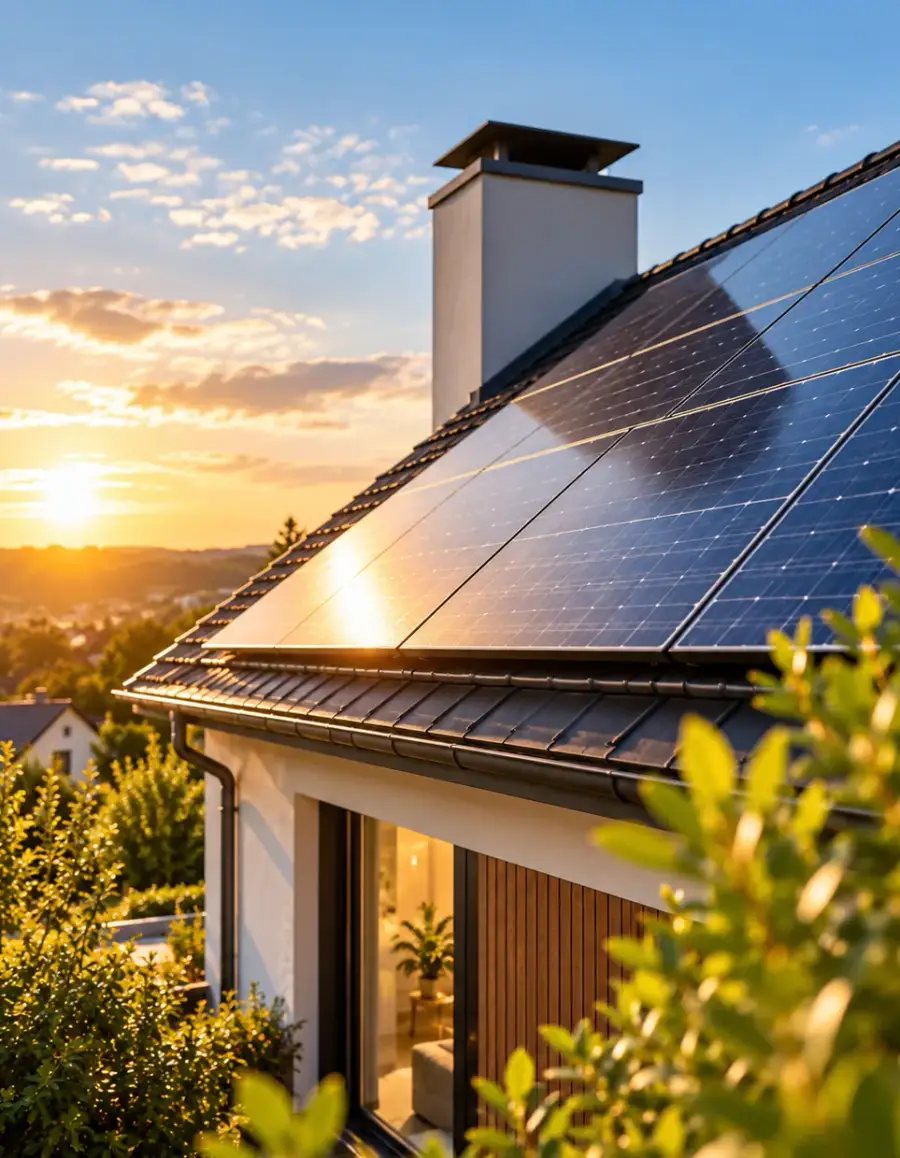
Annual savings
€15,742
10.5 yrs
€39,481
5.9 t/year
Our simulator uses the official Klimabonus 2026 rates and up-to-date market assumptions for Luxembourg.
Electricity price
€0.28/kWh (grid). No payment for surplus: the Klimabonus PV requires self-consumption
Solar yield
950 kWh/kWp/year (Lux average)
Self-consumption
30% without battery, 70% with battery
Heat pump
COP 3.8 (air/water)
Insulation
−25% of heating needs
Heating needs
≈ 130 kWh/m²/year (existing buildings)
Indicative estimates, a personalised quote is required for exact figures. Official subsidies: guichet.lu.
Registered with the Chambre des Métiers
Our partner tradespeople hold a Luxembourg business licence and are registered with the Chamber of Skilled Trades.
100% Luxembourg-based
Vert.lu only works with companies established in the Grand Duchy — no forced cross-border sub-contracting.
Free and no commitment
You remain free to compare, negotiate or refuse any quote. No fee for homeowners.
Fill out our online form in just a few minutes. It's free and with no obligation.
Certified installers from your area will contact you with personalised offers, including your Klimabonus grants.
Freely compare quotes, prices, and customer reviews to choose the professional that's right for you.
Your installer takes care of everything: installation, connection, administrative procedures, and production monitoring.
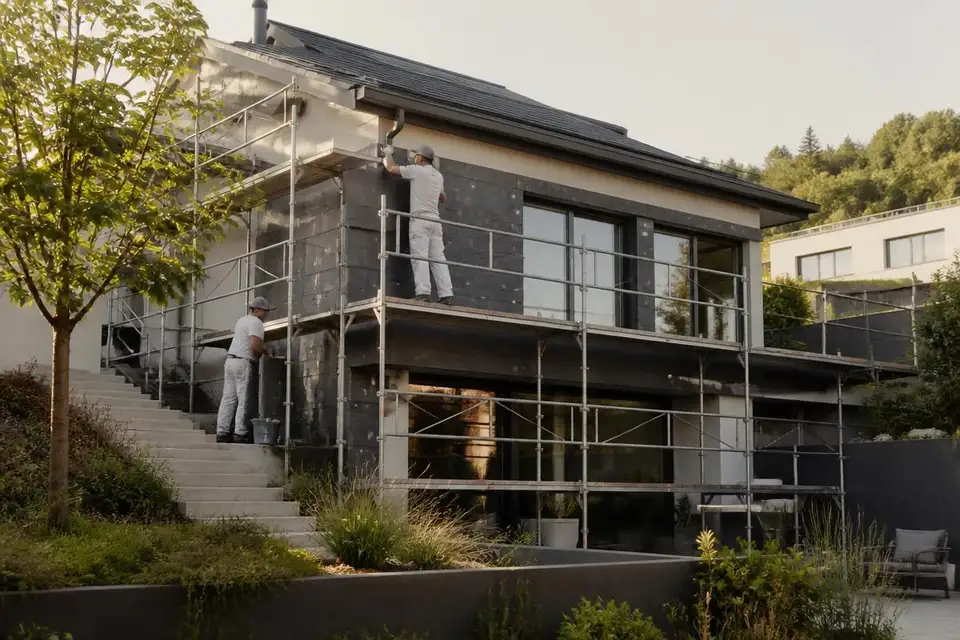
Guide
The simulator gives an order of magnitude, not a promise. It works from the values you enter, so the closer those are to your actual consumption, surface and equipment, the more useful the result. Treat the output as a way to compare options against each other rather than as a figure to budget against, and rerun it once you have real readings from bills or meters.
The next step is a site visit. A professional measures what the tool cannot see: insulation already in place, ventilation, the state of the distribution circuit, available space for equipment and how the dwelling is actually used. Ask each company to state the assumptions behind its own savings figures, and to explain which works have to happen first for the rest to pay off.
The savings simulator applies the data you enter to a calculation model to produce an example order of magnitude for possible savings depending on the equipment considered. It does not measure any real bill: it projects a scenario from the assumptions you provide, comparable to what a simplified spreadsheet would produce.
The result shown is neither a commitment nor a promise of realised savings. It should always be read as a calculation example meant to guide your thinking, not as a figure to hold a company to during a negotiation.
Your household's consumption profile, its split between daytime and evening, and the tariff used in the calculation directly affect the result obtained. The same equipment produces very different savings depending on whether the household consumes mostly during the day or mostly in the evening.
The assumed self-consumption share, meaning the proportion of produced energy the household uses directly rather than exporting to the grid, is one of the most sensitive parameters in the calculation. Likewise, the actual efficiency of the equipment considered, whether panels, a heat pump or a battery, depends on its condition, maintenance and correct installation — factors a simulator cannot assess.
A simulator never visits your home, does not measure the actual insulation of walls or roof, and does not know the precise habits of each household member. It applies a model to average or declared assumptions, which is enough to indicate an order of magnitude but not to guarantee an amount.
Treat any simulation as a preliminary step, to be refined afterwards with professionals who can take your home's actual situation into account.
Once you have run a simulation, the next step is to contact companies for detailed quotes covering your specific home. Ask them to confirm in writing the calculation assumptions they use, so you can compare their proposals with each other and with the simulation result.
A gap between the simulation result and the quotes received is not unusual: it reflects the move from a general model to an assessment that accounts for your home, its condition, and the equipment specifically proposed.
Before investing in more efficient generation or heating equipment, it is generally worth checking the condition of the building envelope: roof and attic insulation, the quality of windows and doors, and airtightness. A poorly insulated home fitted with efficient equipment keeps losing energy through the same weak points.
The order of works also affects how equipment is sized: a heat pump or a solar installation is sized differently depending on whether insulation has already been improved. Independent energy advice, notably from Klima-Agence, helps establish this order before committing to expenses.
A simulation compares scenarios; it does not establish the condition of your home. Air leakage through a poorly sealed roof, an uninsulated floor over a cellar, oversized emitters or an ageing hot water tank change the real outcome markedly, and none of these can be inferred from a form.
Nor does it replace the right order of works. Reducing demand first and choosing equipment afterwards avoids sizing a machine for a house you will insulate the following year. Klima-Agence offers free independent advice, and an audit or an energy passport describes precisely what a simulation can only approximate.
Use the results to set priorities and to ask companies the right questions, then have the assumptions confirmed in writing in the quotes: reference consumption, assumed efficiency, self-consumption share and equipment service life.
FAQ