Klimabonus 2026, Energy Storage · Up to €2,250
Home battery: store your solar energy
Maximise the self-consumption of your photovoltaic system with a storage battery. Up to €2,250 in Klimabonus grants, compare certified installers in Luxembourg.
Up to €2,250 in grants
Home battery subsidised by Klimabonus
100% free
A free service with no obligation for you
Certified installers
Network of verified professionals in Luxembourg
Get your estimate in 1 minute
🔒 No commitment · Reply within 24h
Battery simulator
Estimate your Klimabonus battery grants
Battery grant
€1,806
Indicative amounts based on the official Klimabonus scale. Conditions on guichet.lu
Registered with the Chambre des Métiers
Our partner tradespeople hold a Luxembourg business licence and are registered with the Chamber of Skilled Trades.
100% Luxembourg-based
Vert.lu only works with companies established in the Grand Duchy — no forced cross-border sub-contracting.
Free and no commitment
You remain free to compare, negotiate or refuse any quote. No fee for homeowners.
Official information sources
- Ministry of Energy
- myenergy
- SuperDrecksKescht
- Enovos
How it works
- 1
Describe your project
Fill out our online form in just a few minutes. It's free and with no obligation.
- 2
Receive your quotes
Certified installers from your area will contact you with personalised offers, including your Klimabonus grants.
- 3
Compare and choose
Freely compare quotes, prices, and customer reviews to choose the professional that's right for you.
- 4
Installation and follow-up
Your installer takes care of everything: installation, connection, administrative procedures, and production monitoring.

Guide
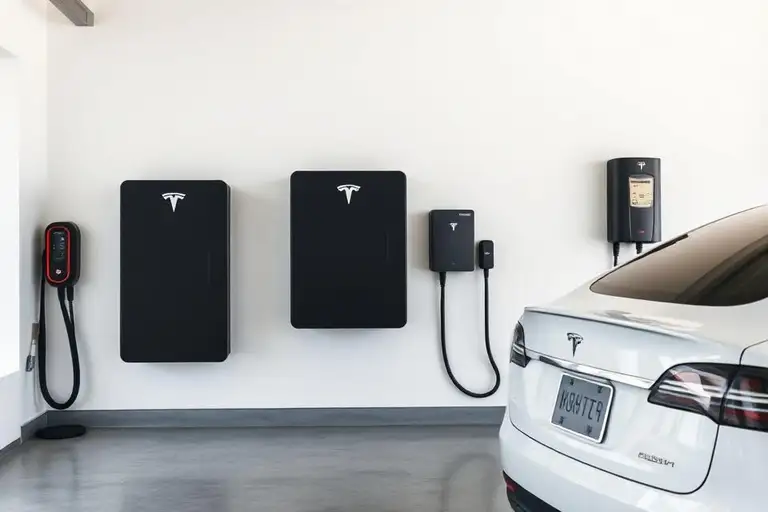
Home battery storage: what it does and how to size itRead the full guide
What a home battery does, and does not, do
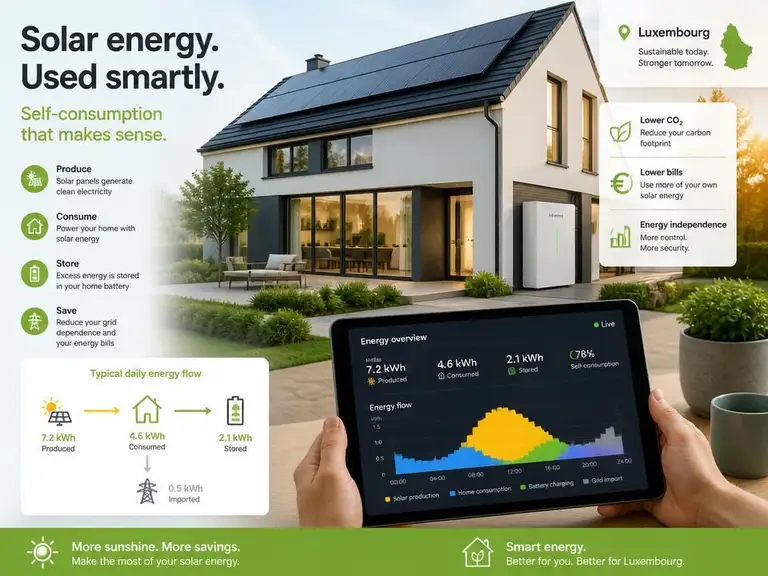
A home battery stores the electricity your photovoltaic panels produce in excess during the day so it can be used in the evening or at night, when production is nil and consumption picks up again. It increases your self-consumption share, but it does not generate any electricity itself: without a photovoltaic installation upstream, or if production is already fully used during the day, it brings no benefit.
It is also not a substitute for a generator or an industrial uninterruptible power supply. A standard grid-tied battery discharges into the home according to the settings defined, but not every configuration keeps the house powered during a grid outage: this backup function must be explicitly requested, wired separately, and checked at handover.
Sizing capacity from your evening consumption profile, not from a catalogue
The right capacity follows from your evening and night consumption compared with the residual output of your panels at those hours, not from a standard product range offered by a manufacturer. A household that mostly consumes between 6pm and 11pm has different needs from one that charges an electric vehicle overnight or heats electrically.
Ask the installer to document this analysis: typical hourly consumption, expected solar output hour by hour, and the coverage rate the battery is meant to achieve. An oversized capacity costs more without added benefit once the evening need is covered, since the surplus that will never be used at night is still exported to the grid as if the battery did not exist.
Installation: technical room, temperature, ventilation and fire safety
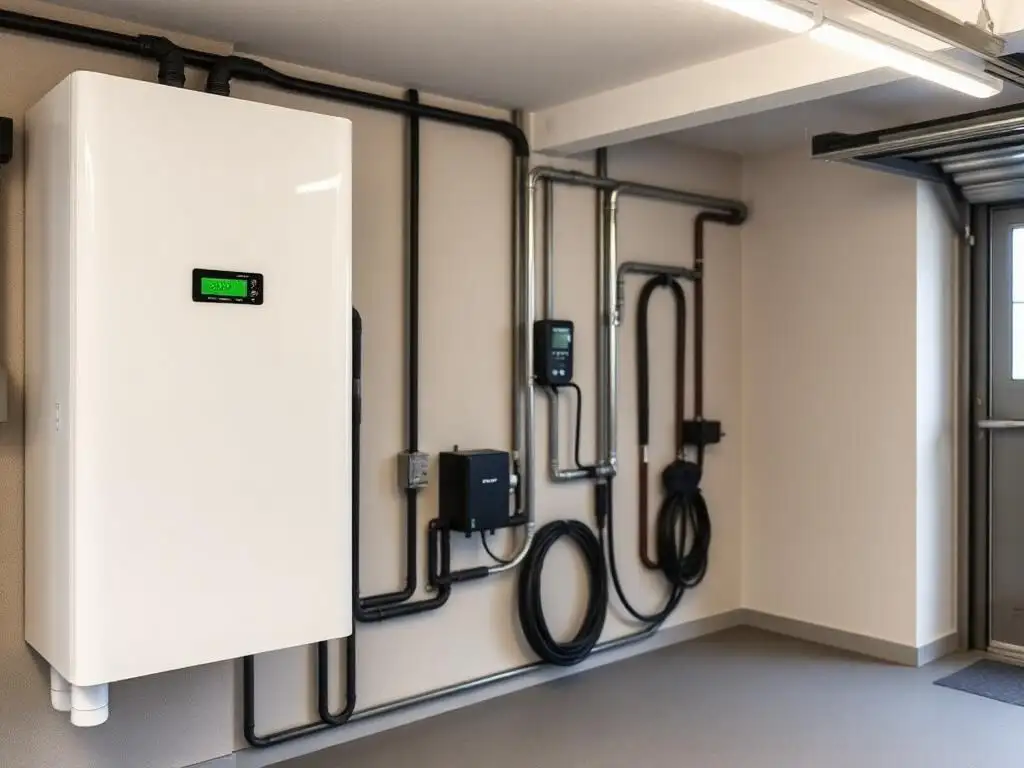
A battery is housed in a technical room, utility room or garage, sheltered from frost and high heat: the operating temperature range specified by the manufacturer determines its location and its actual service life. A minimum level of room ventilation is generally required, and access must stay clear for maintenance.
The fire safety rules that apply to this type of equipment, including the clearance to be kept from combustible materials and any requirement for a nearby smoke detector, must be confirmed by the installer before installation. They vary with the battery technology and power rating and fall under the installer's professional responsibility, not a judgement made on site.
Electrical connection and work by an authorised professional
Connecting a battery to the distribution board and the inverter involves dedicated protective devices, cable sizing adapted to the charge and discharge power, and often an update to the inverter configuration or the addition of a hybrid inverter. This work falls to an electrical company holding a business permit for that trade.
Backup operation, where included, requires a separate circuit that isolates part of the home from the public grid during an outage: this technical point must appear explicitly in the quote, since not every battery or inverter offers it as standard.
Warranty, cycle life and the Klimabonus Wunnen
A battery's service life is expressed in charge and discharge cycles and in the residual capacity guaranteed after a given number of years; both figures are set out in the manufacturer's warranty and should be requested in writing before purchase. Capacity that gradually declines with use is a normal phenomenon, not a defect.
The Klimabonus Wunnen, which replaced the former PRIMe House programme in 2022, includes a dedicated component for a battery coupled to a residential photovoltaic installation. The eligibility conditions, in particular the link to the solar installation, and the amounts applicable at the time of your application are published on guichet.lu.
What the quote must state
A complete quote states the usable capacity in kilowatt-hours, the charge and discharge power, compatibility with your existing inverter or the planned replacement, whether a backup function is included, the electrical protective devices installed, the installation conditions in the technical room, the product warranty and the residual capacity guarantee, and the timeline for installation and commissioning.
Check that the company holds a business permit for electrical work and professional liability insurance; these are public details you can have confirmed before signing.
FAQ
Frequently asked questions
Is a battery worth it without solar panels?
How do I know what capacity to choose?
Does a battery keep power on during an outage?
Who is allowed to install a home battery?
Is a battery covered by the Klimabonus Wunnen?
How long does a home battery last?
Your home deserves better than skyrocketing bills.
70% autonomy
Average self-consumption rate
€800/year
Average savings on your bill
10-15 years
Guaranteed lifespan
Up to €2,250
In Klimabonus grants