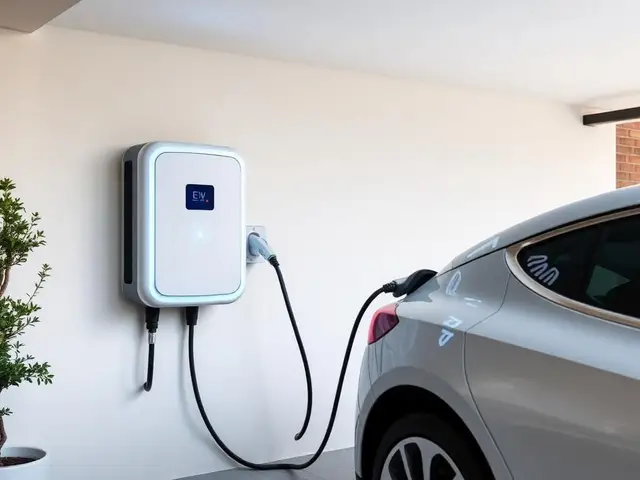
Standard charger · house
- Support
- 50 % excl. VAT
- Installation
- By 31 December 2026
Maximum grant750 €
Compare up to 7 quotes from authorised electricians in Luxembourg. Free and without obligation.
Free estimate · No commitment
You are… ?
681 authorised electrical companies listed in Luxembourg
2026 regime still a draft bill; amounts may change. Source: guichet.lu — Sources: guichet.public.lu
These are conditional grant caps, not installation prices or guaranteed payments. Support depends on eligible expenditure and approval of the application.
A wallbox must suit your vehicle, electrical connection and parking space. Describe your project once to compare authorised electricians' proposals: hardware, protection, installation and grant documentation.
Stay in control from your initial need to choosing the electrician.
Home, vehicle, charger type, solar interest, address and contact details help electricians prepare a suitable proposal.
Check the model, compliance, purchase and installation costs excluding VAT, protection and work included.
Confirm grant conditions and dates before signing. An authorised electrician installs the charger; keep the supporting documents for your application.
A standard charger charges your vehicle without advanced connected management. It may meet daily needs, but its grant period ends in 2026. Do not choose based solely on the cap: check your vehicle's accepted charging power and the capacity of your electrical installation.
A smart charger manages charging. Depending on the equipment, it can allocate available power, limit peaks and communicate with an energy management system. Ask the electrician to identify the functions actually included, compatibility and any service fees.
A charger compliant with EN ISO 15118-20:2022 has a base cap of 1 200 €, increased to 1 400 € for an invoice dated in 2026. Charger compliance alone does not guarantee your car can return energy: the entire technical chain must support it.
Solar panels can supply your car when production and charging coincide. Smart control can adjust charging to available generation. The benefit depends on your roof, schedule and whether the vehicle is at home; no universal saving can be promised.
A home battery can move some generation to other hours. Its value and size need a separate assessment that includes household consumption. Tell us your interest in the form to discuss a coherent solution, without having to buy several systems.
The proposed regime provides up to 1 200 € per smart charger in an apartment building. A shared smart load-management system may receive 50 % of eligible costs, capped at 40 000 € per system. Only one grant for this system is planned per building.
Coordinate cable routes, metering and shared power with the property manager and affected owners before work begins. A well-prepared shared installation can help accommodate further chargers, but actual costs must be detailed in a real quote.
Tenants can also compare solutions. Landlord consent and condominium rules still need checking. The form is neither permission to carry out work nor confirmation of grant eligibility.
The charger must be new, rated strictly above 3.7 kW and installed by an authorised electrician. For a single-family house, support is 50 % of purchase and installation costs excluding VAT, subject to the applicable cap.
Ask for a quote separating equipment, installation and other work. Keep invoices, charger specifications and documents required by the administration. Installation date and invoice year serve different purposes: check both deadlines with the professional.
These figures describe the announced 2026 regime. They do not replace adopted legislation or the administration's decision. Consult the official source before committing, especially if installation falls around the transition to 2027.
Describe your needs and compare authorised electricians' offers. You decide on equipment, timing and installer, without obligation when requesting quotes.