
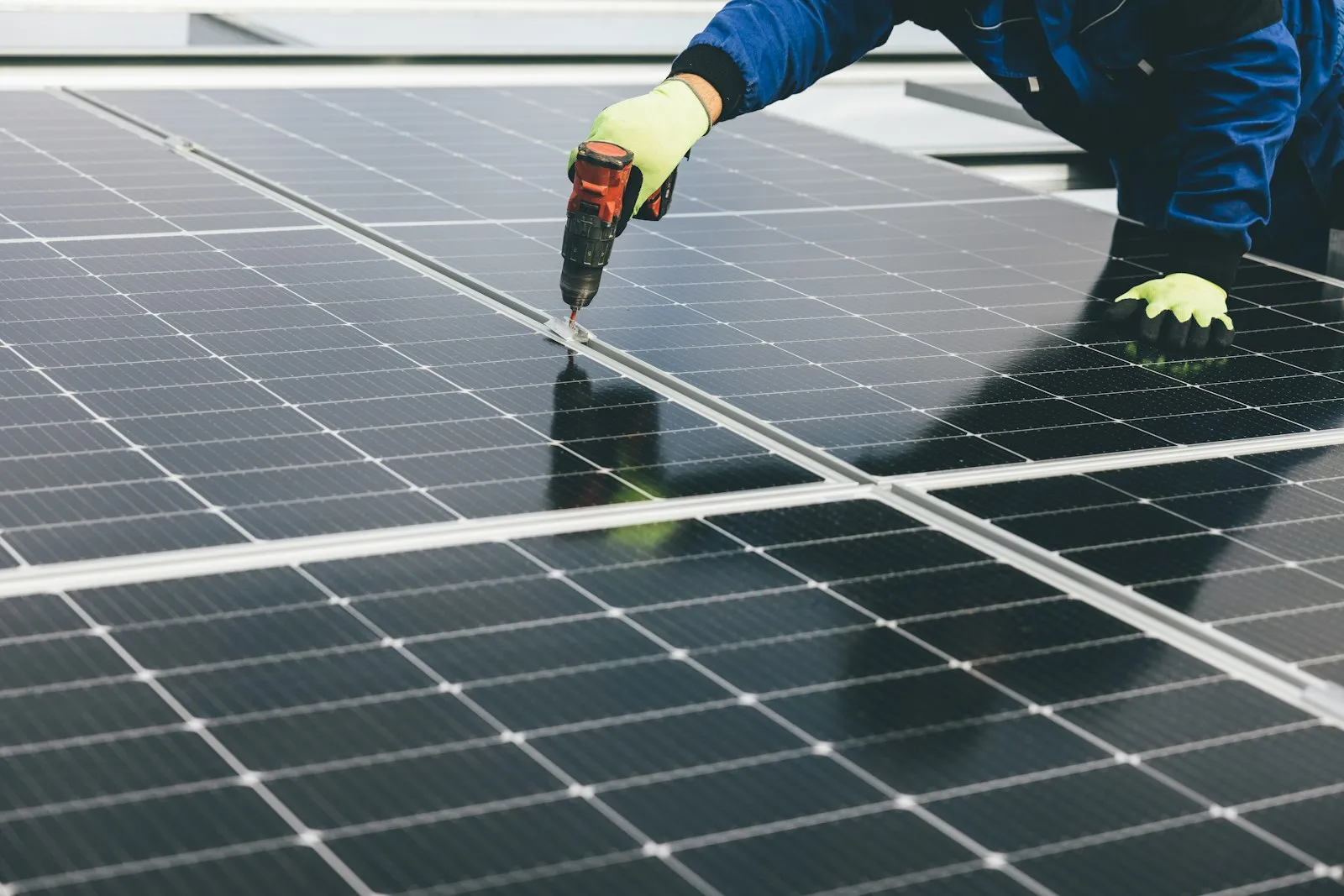
How much does a solar installation cost in Luxembourg in 2026?
Between €1,600 and €2,300 incl. VAT per kWp for a residential system of 6 to 10 kWp, with panels invoiced at 3% VAT. Below 4 kWp, the price per kWp climbs to €2,000 or €2,500, because the fixed costs (travel, scaffolding, inverter, grid connection) are spread over fewer panels. Above 10 kWp, it comes down a little.
| Capacity | Installed price incl. VAT | Klimabonus 2026 grant | Left to pay |
|---|---|---|---|
| 4 kWp | €7,500 to €9,500 | €4,092 | €3,400 to €5,400 |
| 6 kWp | €10,500 to €13,500 | €5,742 | €4,750 to €7,750 |
| 8 kWp | €13,500 to €17,000 | €7,128 | €6,350 to €9,850 |
| 10 kWp | €16,000 to €21,000 | €8,250 | €7,750 to €12,750 |
| 15 kWp | €24,000 to €30,000 | €10,000 | €14,000 to €20,000 |
Ranges observed on the Luxembourg market in 2026, without battery, on a standard pitched roof. Grants are those of the Klimabonus 2026 scheme; prices are orders of magnitude, not quotes.
An €18,000 quote for 6 kWp is not necessarily abusive, but it needs an explanation: slate roof, micro-inverters, electrical panel upgrade. A €7,000 quote deserves the same suspicion in the other direction. In between, the right question is not "how much?" but "how much per kWp, and for which equipment?".
What makes the price of a quote vary?
The roof first, then the equipment. Two neighbouring houses with the same capacity can receive quotes €3,000 apart, for good reasons.
The roof. A standard tiled roof pitched at 30 to 40 degrees is the cheapest case. A flat roof needs ballasted trays or a tilted frame: expect €500 to €1,500 more for 5 to 6 kWp. Natural slate, complex or very high roofs push the bill up to €2,800 per kWp.
The modules. Panels now represent only a quarter to a third of the total price. Between an entry-level module and a premium high-efficiency one, the gap on 6 kWp reaches €1,000 to €1,500. High efficiency is worth it when roof space is short, not otherwise.
The inverter. A central inverter costs less than micro-inverters or optimisers, which add 10 to 20% to the electrical part. They make sense on a partly shaded roof or one with several faces.
Labour and electrical work. Mounting, cabling, protection devices, commissioning and connection to the panel weigh 30 to 40% of the quote. This is where the gaps between installers are widest, and also where sloppy work costs dearly ten years later.
The energy management system. A system that drives the water heater, charging point or heat pump according to solar production costs €500 to €1,500. The Klimabonus 2026 scheme has provided a specific grant for this equipment since autumn 2026; check the amount on guichet.lu before adding it to the quote.
How much is left to pay after the Klimabonus 2026 grant?
About half the price for a 4 to 8 kWp system. The Klimabonus 2026 grant follows the official formula P × (1,155 − 1,155/35 × P), P being the capacity in kWp. It gives €4,092 for 4 kWp, €5,742 for 6 kWp, €7,128 for 8 kWp, €8,250 for 10 kWp and is capped at €10,000 from 15 kWp. Minimum capacity: 2 kWp.
Three conditions to know before signing:
- The system runs in self-consumption mode and you waive the guaranteed feed-in tariff. The surplus is sold at market price, a few cents per kWh.
- Invoices must be dated between 4 January 2026 and 31 December 2029 (31 December 2031 if the order is placed before the end of 2029). The application is filed on MyGuichet.lu after the works, by 31 December 2031 at the latest.
- Panels for a private dwelling are invoiced at the super-reduced VAT rate of 3%. The battery mostly stays at 17%.
You do not have to advance the grant. With an installer listed in the prefinancing register, it is deducted directly from the final invoice and the State pays it to the contractor. Two rules: the order must be signed by 31 December 2029 at the latest, and total deposits may not exceed 30% of the final invoice. An installer asking for 50% on order closes that door for you.
Two top-ups can lower the bill further: the municipal grant, often €500 to €1,500 depending on the municipality, and the Klimabonus social top-up, which can go as far as doubling the grant for modest-income households. Ask before signing, not after.
How much does a battery cost on top, and is it worth it?
Expect €700 to €900 per kWh installed, i.e. €3,500 to €5,500 for a 5 kWh battery and €5,000 to €7,500 for 7 to 8 kWh. The Klimabonus battery grant follows the formula Q × (500 − 500/18 × Q), Q being the usable capacity in kWh: €1,806 for 5 kWh, €2,139 for 7 kWh, €2,250 at most from 9 kWh. Minimum capacity: 2 kWh, and the battery must be connected to a system in self-consumption mode.
| Configuration | Installed price incl. VAT | Klimabonus grants | Left to pay |
|---|---|---|---|
| 6 kWp alone | about €12,000 | €5,742 | about €6,250 |
| 6 kWp + 5 kWh battery | about €16,500 | €7,548 | about €8,950 |
| 8 kWp + 7 kWh battery | about €21,000 | €9,267 | about €11,750 |
Indicative 2026 prices, battery at 17% VAT.
The battery raises a family home's self-consumption from 35% to about 65%. It therefore brings €250 to €350 of avoided electricity per year on top, for €3,000 to €4,500 of net investment. The maths works if you are out during the day and home in the evening. It works less well if a heat pump or a charging point already absorbs the surplus during the day.
Which extra costs are not always in the quote?
Five items regularly make the difference between the announced price and the paid price.
- The meter and the grid operator. If your installation needs a second meter, the grid operator comes to install it and invoices you for that visit. Ask the installer whether this applies to you.
- The electrical panel. A 1970s or 1980s house often needs a panel upgrade or an additional residual-current device: a few hundred euros, sometimes over €1,000.
- Scaffolding and access. Normally included, but a three-storey house or difficult access can take it out of the package.
- The roof itself. Putting panels for 25 years on a covering at the end of its life is a classic mistake. If the roof has to be redone in ten years, do it before, not after.
- The replacement inverter. It lives 10 to 15 years, less than the panels. Expect €800 to €2,000 around year twelve. A serious quote mentions it.
Add the extension of your home insurance, an inspection every 5 to 10 years and, in some municipalities, a works declaration or a permit. None of this makes the project a bad one, but all of it must be on the table before signing.
How do you pay the right price for your installation?
Six reflexes that save several thousand euros:
- Compare at least three quotes. For the same capacity, the gap between the most and least expensive quote often exceeds €3,000. It is the most profitable decision of the whole project.
- Compare the price per kWp, not the total. A €14,000 quote for 8 kWp (€1,750 per kWp) is cheaper than an €11,000 quote for 5 kWp (€2,200 per kWp).
- Demand the details. Brand and model of modules and inverter, number of panels, total capacity in kWp, product and performance warranties, battery cost shown separately. A one-line quote is a quote to refuse.
- Size according to consumption. A household using 4,000 kWh does not need 12 kWp. The surplus goes for a few cents and the grant per kWp falls with size.
- Check prefinancing and the deposit. Installer listed in the register, deposit capped at 30%: you will never lay out the grant.
- Run an independent simulation. The Klima-Agence simulator and our calculator give you a neutral reference before the first salesperson arrives. Our partner contractors know you will come prepared.
Frequently asked questions
How much does a 6 kWp solar installation cost in Luxembourg?
Between €10,500 and €13,500 incl. VAT installed in 2026, without battery, i.e. €1,600 to €2,300 per kWp. After the €5,742 Klimabonus grant, €4,750 to €7,750 is left to pay.
What is the price per kWp in 2026?
€1,600 to €2,300 incl. VAT per kWp for a 6 to 10 kWp system on a standard roof. Small systems under 4 kWp cost €2,000 to €2,500 per kWp, slate or complex roofs up to €2,800.
Which VAT rate applies to solar panels in Luxembourg?
The super-reduced 3% rate on the supply and installation of panels for a private dwelling, invoiced directly by the installer. The battery mostly stays at 17%.
Do you have to advance the Klimabonus grant?
No, if your installer is listed in the prefinancing register: the grant is deducted from the final invoice. Deposits must not exceed 30% of the total and the order must be signed before 31 December 2029.
How much does a home battery cost on top?
Expect €700 to €900 per kWh installed, i.e. €3,500 to €5,500 for 5 kWh. The Klimabonus battery grant reaches €1,806 for 5 kWh and €2,250 at most from 9 kWh.
One price means little without a second
One request. Up to 7 quotes from Luxembourg tradespeople. You pay nothing, you sign nothing.
Request my quotesOfficial references
guichet.lu, Klimabonus 2026 : aide pour les installations techniques (photovoltaïque et batterie) · Klima-Agence, fiche pratique photovoltaïque et simulateur d'aides · Klima-Agence, conseil en énergie indépendant · Administration de l'environnement